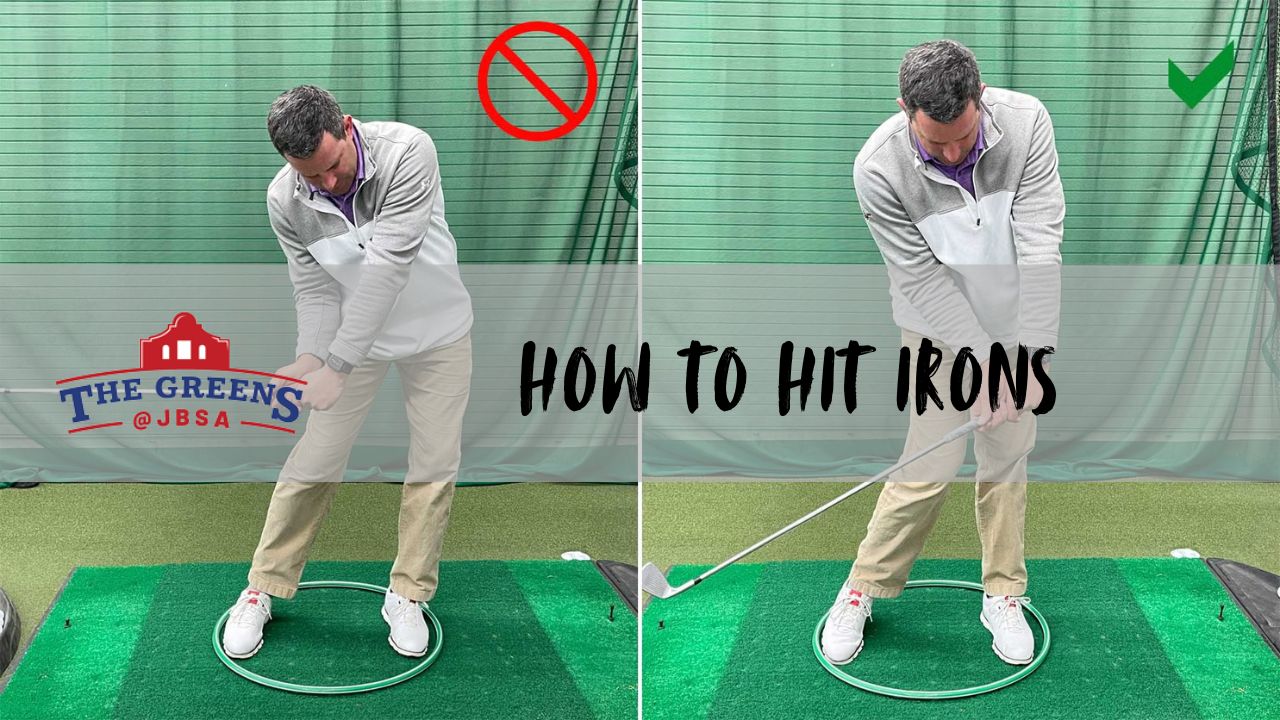
Struggling with fat shots, thin shots, or shots that just won't fly clean? You're not alone. Most amateur golfers never learn how to hit irons the right way because nobody breaks the process down into simple steps. This guide fixes that. You'll learn exactly what setup, ball position, and swing mechanics create crisp, ball-first contact every single time. Let's get into it.
Why Most Golfers Struggle With Iron Contact
Here's the truth. Great iron play isn't about swinging harder. It's about controlling one specific thing: the low point of your swing arc.
Picture your golf swing as a circle. That circle has a low point, just like a pendulum swinging back and forth. If that low point sits behind the ball, you'll hit it fat. If it sits too far forward, you'll catch it thin or top it completely. The best ball strikers in the world control exactly where that low point happens.
Once you understand this concept, everything else in your swing starts to make sense.
The Low Point Concept Explained
Your swing naturally moves in an arc, similar to a circle.
That arc has one lowest point, where the club sits closest to the ground.
Tour pros bottom out roughly three to four inches after the ball.
Amateurs often bottom out too early, causing fat or thin contact.
What Great Contact Actually Looks Like
Elite ball strikers don't hit the ball and the ground at the same time. Instead, the club strikes the ball first, then continues down and takes a divot after the ball. This downward strike compresses the ball against the clubface, producing that satisfying, tour-quality sound and flight.
How To Check Your Current Strike Pattern
Before changing anything in your swing, figure out where you currently make contact. Here's a simple test:
Grab a tee or an alignment stick.
Scratch two lines in the grass, one on each side of the ball.
Hit a few shots and watch where your divot begins.
Compare the divot start point to the ball's original position.
This single test reveals everything about your current strike pattern before you start making changes.
How To Hit Irons: Fixing Your Setup First
You can't fix ball striking through swing changes alone. Most of your success is decided before you even move the club. If you want to learn how to hit irons properly, setup comes first.
Key Setup Fundamentals
A Word Of Caution On Setup Changes
Small setup adjustments create big results. Don't change everything at once. Pick one element, feel it, then hit a few shots before moving to the next. Overloading your setup with five changes at once usually backfires.
Ball Position: The Detail Everyone Skips
Ball position gets ignored more than almost any other fundamental, yet it plays a massive role in solid ball striking.
Where To Play The Ball
Think of your swing's low point as sitting directly underneath your lead armpit. For solid contact, the ball needs to sit behind that point, not in front of it.
For a mid-iron, play the ball roughly two to three ball-widths back of center.
For longer irons, move it slightly further forward, closer to center.
For short irons and wedges, ball position can sit a touch further back.
What Happens When Ball Position Is Wrong
A simple trick: place a golf club on the ground as an alignment guide. Practice hitting a few shots from that exact ball position until it becomes automatic.
The Two Things That Control Your Low Point
If you truly want to master how to hit irons consistently, focus on these two swing elements.
1. Lead Shoulder Position At Impact
Where your lead shoulder sits at the moment of impact determines where your swing bottoms out. Keep it ahead of the ball, and your low point naturally shifts forward too.
2. Radius Of Your Swing
The distance between your lead shoulder and the clubhead should stay consistent through impact.
If that radius shrinks too early, your wrists release too soon.
Early release causes the club to strike the ground before the ball.
Maintaining radius through impact keeps the low point positioned correctly.
Together, these two factors decide whether you compress the ball beautifully or chunk it into the turf.
How To Create Proper Shaft Lean At Impact
Shaft lean simply means your hands stay ahead of the clubhead through impact. This delofts the clubface slightly, adds compression, and increases both control and distance.
Steps To Build Shaft Lean
Keep your hands slightly ahead of the ball at address.
Avoid releasing your wrists early in the downswing.
Let your body rotation, not your hands, drive the club through the ball.
Feel like your hands arrive at the ball before the clubhead does.
Golfers who scoop or flip the club through impact almost always lose shaft lean. This is one of the biggest reasons behind inconsistent iron shots.
Downswing Moves That Improve Iron Strikes
Once your setup and ball position are dialed in, focus on these downswing principles.
Core Downswing Checklist
Shift your weight smoothly onto your lead foot as you start down.
Keep your swing radius steady until just after impact.
Rotate your chest and hips toward the target through the shot.
Resist the urge to help the ball into the air.
Let the loft of the club do the lifting work, not your hands.
Trying to lift the ball is one of the most common swing faults among amateurs. Trust the club's design and swing down through the ball instead.
Common Mistakes That Wreck Iron Contact
Here's a quick reference table so you can diagnose your own miss.
Identifying your specific miss pattern speeds up improvement dramatically. Don't guess. Use divot lines to diagnose the real issue.
A Simple Drill To Groove Ball-First Contact
This drill is one of the fastest ways to build consistent, ball-then-turf contact.
Step-By-Step Drill
Place two tees or clubs on either side of the ball as visual markers.
Set up using the forward hip and shoulder positions covered earlier.
Make a smooth practice swing while watching where the club brushes the grass.
Once you feel the pattern, step in and hit the actual shot.
Check your divot. It should start after the ball, not before it.
Repeat this drill in short sessions. Avoid overthinking the mechanics mid-swing. Let your body adjust naturally once you're aware of the pattern.
Building A Simple Weekly Practice Plan
Consistency comes from repetition, not from swing thoughts alone.
Weekly Practice Schedule
Spending even fifteen minutes on each of these areas weekly builds real, lasting improvement.
Final Thoughts
Learning how to hit irons isn't about one secret move. It comes down to controlling your setup, your ball position, and the low point of your swing. Once your lead shoulder and swing radius work together, ball-first contact becomes automatic instead of accidental.
Start with setup. Add ball position next. Then build shaft lean and rotation into your downswing. Practice each piece separately before combining them.
Master these fundamentals, and you'll finally understand how to hit irons the way better players do: with clean strikes, tighter dispersion, and far more confidence over every shot.
Also Read About:
5 Best Golf Swing Drills to Improve Your Swing Fast
Frequently Asked Questions
1. How do I hit irons more consistently?
Focus on your setup first. Keep your hips and shoulders slightly forward of center, position the ball correctly, and maintain your swing radius through impact. Consistency comes from controlling where your swing's low point lands, not from swinging harder.
2. Where should the ball be positioned to hit irons cleanly?
For mid-irons, play the ball roughly two to three ball-widths back of center. Longer irons sit slightly more forward, while short irons can sit a touch further back. The goal is keeping the ball behind your swing's low point.
3. Why do I keep hitting my irons fat?
Fat shots usually happen when your swing's low point sits too far behind the ball. This often comes from weight hanging back on your trail foot or hips sitting too far behind center at impact. Shifting your weight forward at setup fixes this quickly.
4. What causes thin or topped iron shots?
Thin shots happen when the low point of your swing occurs too early, before the club reaches the ball. This is often caused by poor ball position or early wrist release. Adjusting ball position and delaying release usually solves it.